
The Falepili Mobility Pathway Support Service (Australia) is a free service available for Falepili Mobility Pathway visa holders upon arrival in Australia
Falepili Mobility Pathway visa holders will also have access to a wide range of support services and benefits to help with the cost of living, studying, training and raising a family in Australia. As permanent residents, you and your family can live, work and study anywhere in Australia.
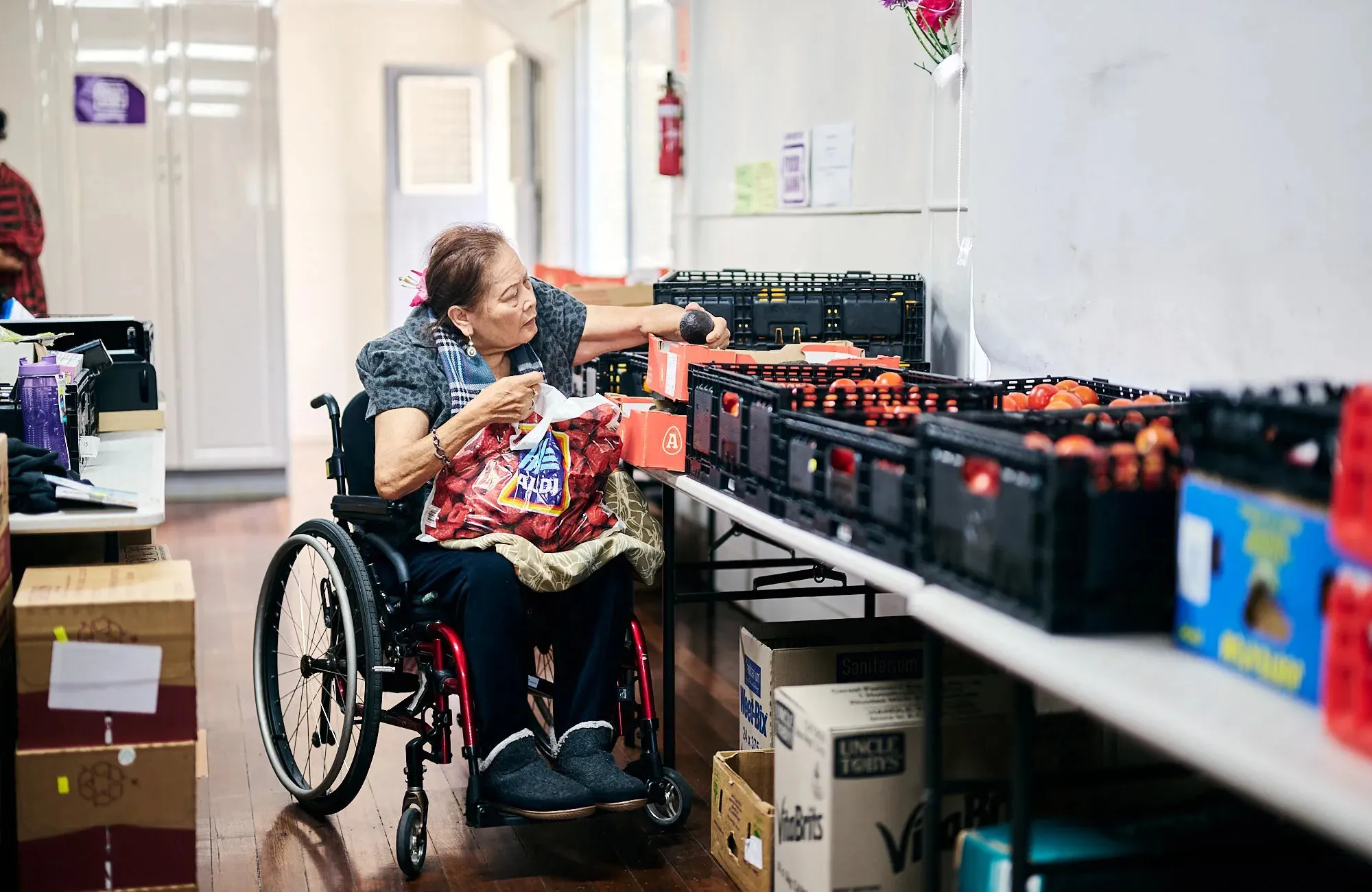

The Falepili Mobility Pathway Support Service (Australia)
How we can help you before you arrive
Before you arrive in Australia, one of our Tuvaluan Liaison Officers will reach out to you. They’ll introduce themselves, get to know you, and learn about your needs so they can support you in the best way possible. This is your chance to ask any questions and start building a connection. When you arrive, your Liaison Officer will be your key contact—ready to welcome as you begin your settlement journey in Australia.
Your liaison officer will work with you to create a personalised assessment to understand your health, housing, education, and employment needs.
Depending on the notice you provide, we can coordinate preparations for a smooth arrival. This can include transport from the airport to the accommodation you have arranged prior to arrival to Australia.
When you first arrive in Australia
If you have given your Liaison Officer your arrival and flight details, they can be there at the airport to welcome you to Australia and transport to your accommodation that you will have arranged before you leave Tuvalu.
Based on your needs, we can help you with any essential registrations and orientation on government and non-government services including Medicare, Centrelink. We can assist you to get a Tax File Number and open an Australian bank account.
We can also provide you with key safety information, so you feel confident and safe as you navigate your first few months in Australia.
Ongoing support from our team
Our Liaison Officers will work with you to develop individual settlement plans for you and your family to settle in Australia. These plans will be based on your goals and needs.
We will provide you with regular check-ins and referrals to services as you need it.
Getting to know Australia
We can provide you with information sessions on Australian laws, culture, digital literacy, and employment pathways, building on from those you may have participated in before you left Tuvalu.
These will be delivered in Tuvaluan with practical activities and assessments.
You can also check out some of our podcasts about life in Australia via the channel Australian Life Podcast by AMES Australia | Podcast on Spotify.
Helping you learn, work, and connect
We can connect you with the Adult Migrant English Program (AMEP) for further English language training and education support.
We can also provide employment assistance and community participation including referrals to employers, introduction to training, connection to health and wellbeing services and social services.
We are available to help with some housing support, including helping you find, apply for, and settle into a rental home by searching for properties, organising inspections for you to attend and assisting with the applications.
Preparing you for independence
We will work with you to create a transition plan for your continued settlement success by making sure you are connected to the mainstream services you may need in the future.

Access to Australian Government support
Falepili Mobility Pathway visa holders will have access to a wide range of support services and benefits to help with the cost of living, studying, training and raising a family in Australia.
As permanent residents, you and your family can live, work and study anywhere in Australia.
As permanent residents, you and your family will be eligible for Australia’s universal public health system, Medicare, subsidised medicines through the Pharmaceutical Benefits Scheme, government-funded schools, and Commonwealth-supported university places.
Falepili Pathway visa holders may access a range of Australian Government benefits and payments. However, it is important to note that eligibility and location requirements may apply to some services and supports. For example, Falepili Pathway visa holders must live in Australia to be eligible for Medicare, NDIS, and most education and training support schemes.
If you’ve recently arrived as a resident in Australia, you will have to wait to get other payments and concession, including a 4-year wait period for Job Seeker and a 10-year wait for the Age Pension.
The Falepili Mobility Pathway Support Service (Australia) can help you to determine which services and supports you need, and how to access them once you arrive.
Government payments and concessions
If you are granted a Falepili Mobility Pathway visa, you may be eligible for some payments and concessions. To receive these payments, you will need to meet the other eligibility criteria. These can include Child Care Subsidy, Family Tax Benefit, Austudy and Youth Allowance (Student and Australian Apprentice).
Health and wellbeing support
Medicare is Australia’s universal health care system. Medicare helps to cover part or all of the costs of medicines, medical services, and hospital care for Australians and eligible migrants. To find out what is covered (and not covered) by Medicare visit the Medicare website.
As a Falepili Pathway visa holder, you will be eligible to enrol in Medicare once you arrive in Australia on the Services Australia website.
You can also find information in your language on the Services Australia website.
Your children may also be eligible for Child Dental Benefits Schedule (CDBS) – if eligible you will receive a letter advising you of this.
Detailed information about CDBS is on the Services Australia website - Child Dental Benefits Schedule - Services Australia.
It is important to check CDBS eligibility and balance before you book your children in for a dental visit.
Under the Pharmaceutical Benefits Scheme, or PBS, the Australian Government subsidises the cost of medicine for most medical conditions. The PBS is a scheme that is available to all Australian residents who hold a current Medicare card. When you visit the pharmacist, you will need to provide your Medicare card.
Find out more about the Scheme on the PBS website
The NDIS provides funding to eligible people with disability to gain more time with family and friends, greater independence, access to new skills, jobs, or volunteering in their community, and an improved quality of life.
The NDIS also connects anyone with disability to services in their community.
This includes connections to doctors, community groups, sporting clubs, support groups, libraries and schools, as well as providing information about what support is provided by each state and territory government.
Find out more about the NDIS on the NDIS website.
Family Support
Child Care Subsidy (CCS) is an Australian Government payment to help families with the cost of childcare.
If you are eligible, CCS is paid directly to the approved childcare provider or preschools your children may attend. This reduces the amount you have to pay. CCS does not cover the total cost of childcare.
You will usually need to pay a portion of the fees. You may also get CCS if your children attend before or after school care.
The amount of CCS you get depends on a number of things, such as how much your family earns, what type of childcare you use and how old your children are.
Find out more about Child Care Subsidy, including the full eligibility criteria, on the Services Australia website. You can also find information in your language on the Services Australia website.
Family Tax Benefit (FTB) is a payment from the Australian Government to help with the costs of raising children. You may be eligible for FTB if you have your children with you in Australia. Only families earning below a certain income are eligible for FTB.
There are two parts to Family Tax Benefit:
- FTB Part A is paid per child
- FTB Part B is extra help to single parents or families with one main income.
If you are eligible, how much you will get depends on your family’s circumstances, for example how much your family earns, whether your children are up to date with their immunisations and how old your children are.
If you get Family Tax Benefit, you may also be eligible for Rent Assistance, Multiple Birth Allowance and the Newborn Upfront Payment and Newborn Supplement.
Find out more about Family Tax Benefit including the full eligibility criteria on the Services Australia website. You can also find information in your language on the Services Australia website.
Education and Training Support
Austudy provides financial support for people aged 25 or older studying an approved course or doing an Australian Apprenticeship. You must meet income test requirements, and how much you get is determined by your earnings.
Find out more about Austudy, including the full eligibility criteria, on the Services Australia website.
Youth Allowance is a payment from the Australian Government available to young people who are students or apprentices.
Find out more about Youth Allowance for Students and Australian Apprentices, including the full eligibility criteria, on the Services Australia website.
The Higher Education Loan Program (HELP) has 4 different loan schemes that provide financial support to tertiary level students.
- Student contributions (HECS-HELP)
- Tuition fees (FEE-HELP)
- Student service and amenities fees (SA-HELP)
- Overseas study expenses (OS-HELP).
Find out more about HELP loans on the Department of Education website.
The VET Student Loan (VSL) program helps eligible students pay tuition fees for approved vocational education and training (VET) courses. You must be studying for a diploma or higher qualification. Find out more about VET student loans on the Department of Employment and Workplace Relations website.
You must repay the loan once your income reaches a certain level via deductions from your pay.
More information about repaying study and training support loans is available on the Australian Taxation Office website.

Additional settlement support
Settlement Engagement and Transition Support (SETS) program
In addition to the dedicated Falepili Mobility Pathway Support Service (Australia), all Falepili Pathway visa holders will also have free access to the Settlement Engagement and Transition Support (SETS) program as soon as you arrive in Australia, which provides information and assistance to help you access services.
Find out more about the SETS program on the Department of Home Affairs website.
Adult Migrant English Program (AMEP)
Learning English will help you to fully participate in life in Australia. You will learn new skills that help you work and make friends. Falepili Pathway visa holders have access to the free Adult Migrant English Program (AMEP) when you arrive in Australia if eligible.
Flexible learning options are available, including:
- face-to-face classes including full-time, part-time, evening and weekend classes
- online for free at AMEPOnline, or on the new app available on the App Store of Google Play
- distance learning.
If you have children under school age, free childcare can be arranged while you attend classes.
You must register for the AMEP within six months of arrival, start your course within 12 months and complete your course within 5 years.
Find out more about the AMEP and your eligibility on the Department of Home Affairs website.
Translating and Interpreting Service (TIS National)
TIS National services are available anywhere in Australia 24 hours a day, every day of the year – just call 131 450 and say the language you need.
TIS National can offer services in some Pacific languages. Using a professional, certified interpreter improves understanding, access, and quality of service.
TIS National provides interpreting services to a wide range of agencies and businesses throughout Australia. TIS National can connect to our registered agency clients including:
- state and federal government departments – including Home Affairs
- utility companies
- telecommunication companies
- emergency services
- legal services
- settlement and community service providers.
The Free Interpreting Service is delivered by TIS National to eligible agency groups. The services you can access that are part of the FIS include: private medical practitioners, pharmacies, real estate agencies, city/shire councils, registered trade unions, parliamentarians, eligible non-government organisations (for approved casework and emergency services) and eligible allied health professionals (in selected LGAs).
If you need a free interpreter, you can call TIS National or ask your eligible service provider to organise one for you.
Free Translating Service
TIS National also delivers the Free Translating Service. This service is available to PEV holders and visa people settling permanently in Australia.
If your personal documents are not in English, you can request up to 10 free document translations within the first 2 years of an eligible visa grant date.
Having personal documents is an essential first step for many migrants settling in Australia to help you access other key support services.
Find out more about any of the services delivered by TIS National, including the Free Interpreting Service and the Free Translating Service by visiting the TIS National website.